Scan what exists
List the skills, proof, relationships, savings, audience, trust, and unfinished assets that could actually be used.
Life is made of decisions. The difference is not only which road you choose, but whether you can see the structure behind the road.
Living Path Thinking is a practical tool for looking one level up before an important choice: what the choice rests on, how much room it leaves, and whether it leaves proof, skill, trust, and relationships in your hands.
Living Path Thinking checks whether a choice leaves skill, proof, trust, and relationships, so when the world changes faster than the old plan, you are not empty-handed.
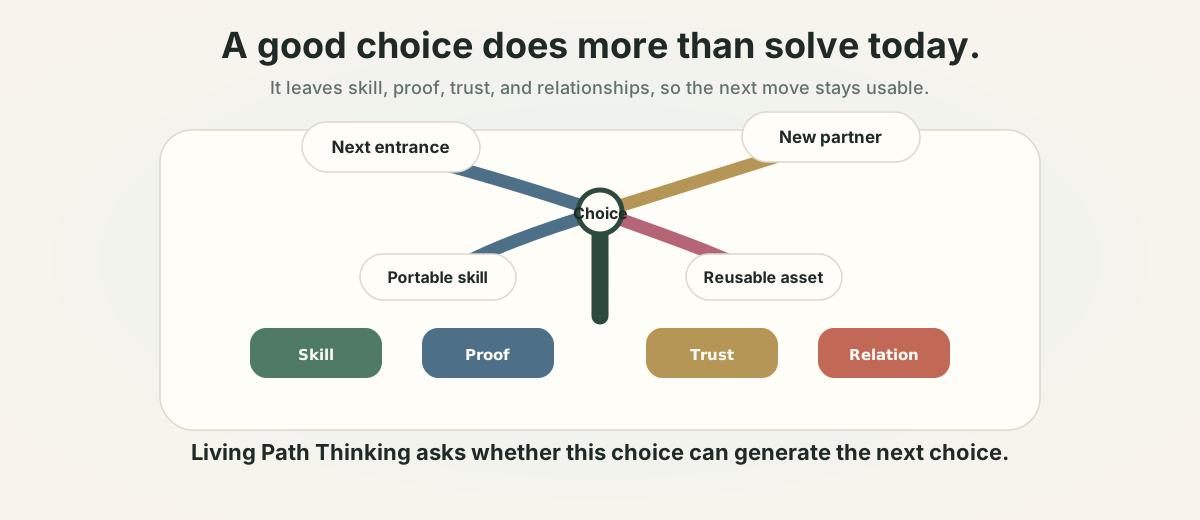
One rule of thumb: a real option leaves usable material in your hands.
Many plans look strong because the surface labels are different. OMP examines the structure underneath: load-bearing points, adjustment room, and the material a move leaves for later judgment. The benefit is a larger map before the pressure arrives.
A stable company can reorganize. A platform can change distribution. AI can reprice a skill. Family duties, health, location, and cash flow can all rewrite the available paths.
OMP turns that pressure into a practical thinking tool: where is the load-bearing point, and which small move would leave more room before you need it? This is how the method makes you steadier without using pressure as a sales pitch.
List the skills, proof, relationships, savings, audience, trust, and unfinished assets that could actually be used.
Find which routes rely on the same employer, platform, market cycle, customer type, body condition, timing window, or identity.
Choose the smallest action that leaves proof, skill, trust, room, or a clearer signal for the next judgment.
A side project, an investment account, a certificate, and a network can still be one crowded structure if they all depend on the same market or identity. A real option carries weight because it can branch, and branching gives you a better view of the whole game.